
NASA's James Webb Telescope Captures Stunning Images of Distant Galaxy
The James Webb Space Telescope has revealed unprecedented details of a galaxy formed just 400 million years after the Big Bang, providing new insights into early universe formation and cosmic evolution.
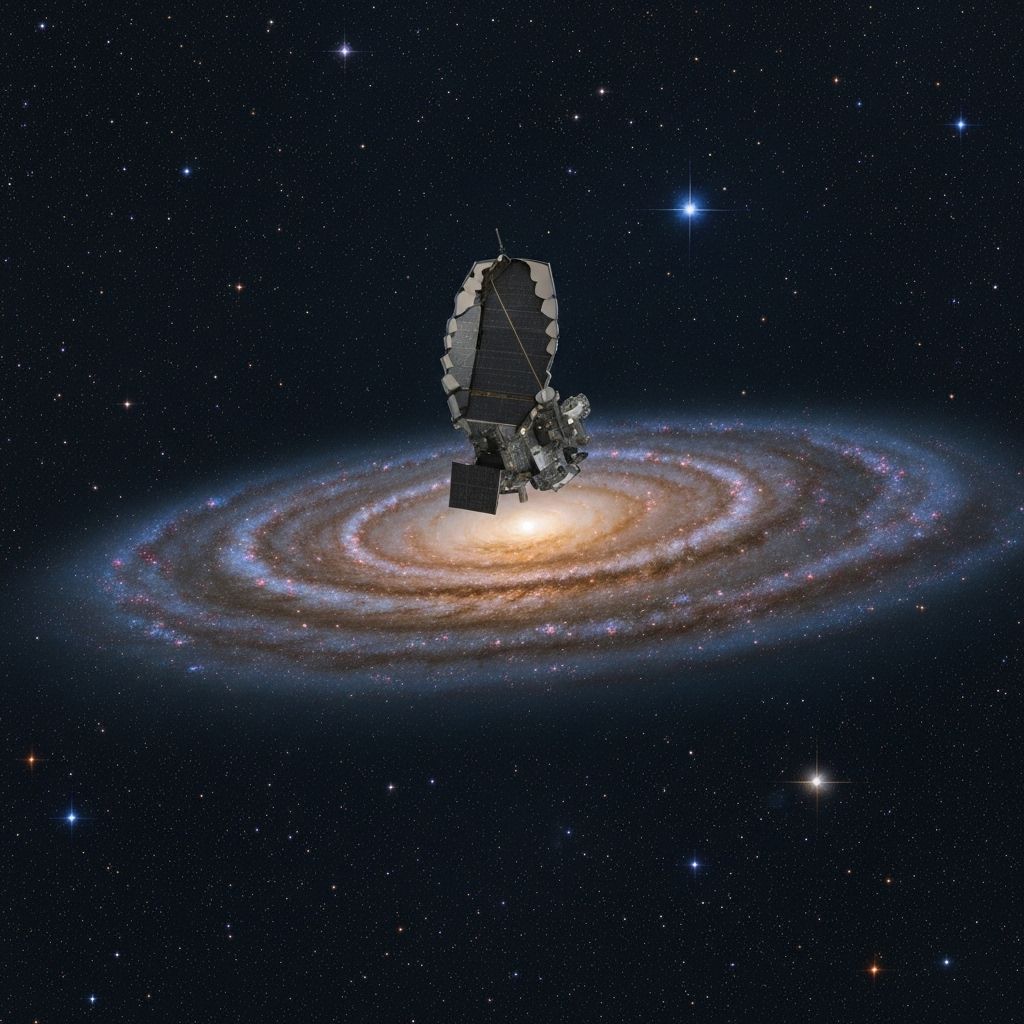
Complete Article Summary
The James Webb Space Telescope has revealed unprecedented details of a galaxy formed just 400 million years after the Big Bang, providing new insights into early universe formation and cosmic evolution.
Astronomical observations like these expand our knowledge of the universe and test our understanding of fundamental physics. Advanced telescopes and detection systems, operating across multiple wavelengths from radio to gamma rays, allow scientists to peer deeper into space and time than ever before.
Modern observatories combine cutting-edge optics, adaptive systems, and sophisticated data processing to reveal phenomena that were invisible to previous generations of instruments. From exoplanet atmospheres to the earliest galaxies formed after the Big Bang, these observations challenge and refine our cosmological models.
The data collected contributes to multiple fields of study, including stellar evolution, galactic dynamics, dark matter distribution, and the expansion rate of the universe. Each observation adds pieces to the grand puzzle of cosmic history and our place within it.
Why This Matters
Editorial analysis by The Orbital
NASA's James Webb Telescope has captured stunning images of a distant galaxy, offering new insights into the early universe and cosmic evolution.
More Space News
Related articles will be displayed here based on category and content similarity.